
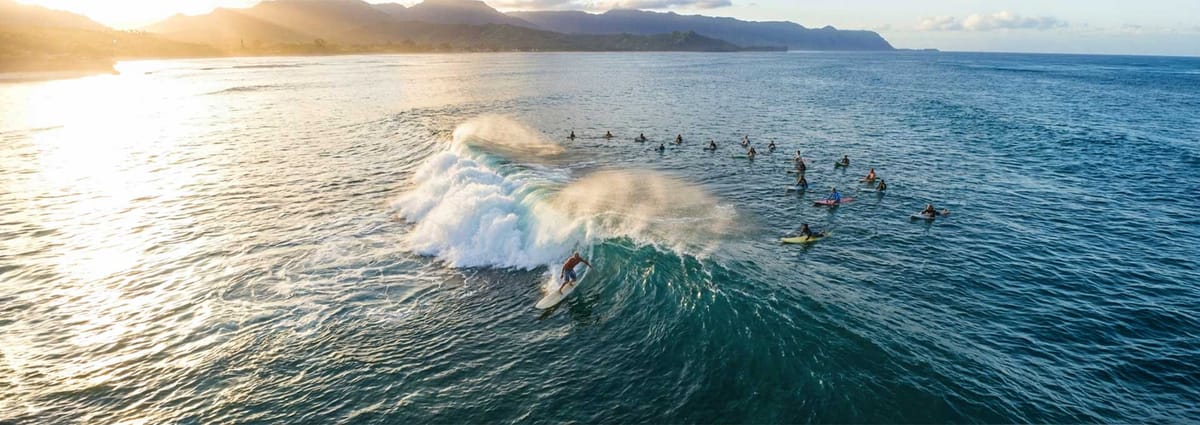
How Pidgin Commands the Hawaiian Waters
If you paddle out at any surf break around the world, you will hear a familiar lexicon of global surf slang. Words like "stoked," "gnarly," and "kook" have been exported globally by mainland beach culture and mainstream media. But when you paddle out in Hawaiʻi, the birthplace of wave riding, that mainstream vocabulary is quickly replaced by something much deeper.
In a Hawaiian lineup, the language of the water is Hawaiian Pidgin. It is not just casual slang thrown around between sets. Pidgin is a highly functional tool used to navigate complex social hierarchies, establish belonging, and manage some of the most crowded and dangerous surf breaks on the planet. To understand the lineup here, you have to understand the language.
Roots in the Reef: From Kapu to Cane Fields
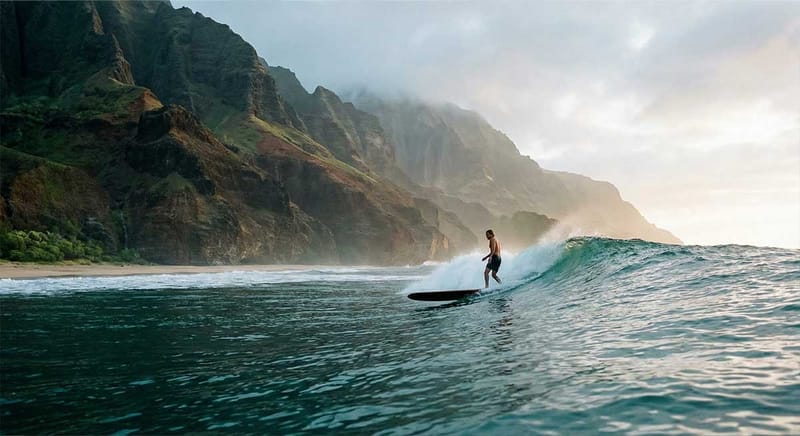
Long before surfboards were mass-produced, ancient Polynesians cultivated an intimate relationship with the ocean. The ancient Hawaiians called surfing heʻe nalu, which translates to sliding on a wave. It was a spiritual and social cornerstone of island life, heavily regulated by the ancient kapu system.
Under this strict system of social laws, the highest-ranking chiefs, or aliʻi, claimed the best surf breaks. If a commoner, known as a makaʻāinana, dropped in on a wave being ridden by an aliʻi, the penalty was often death. This ancient hierarchy is the original blueprint for wave priority, predating modern surf etiquette by centuries.
When waves of immigrant laborers arrived to work the sugarcane fields in the 19th century, a new language was born out of necessity. Hawaiian Pidgin emerged as a bridge between Native Hawaiians, plantation owners, and workers from Japan, China, the Philippines, and Portugal. You can read the full history of this linguistic evolution in our guide on the history of Pidgin in Hawaiʻi. Today, this language continues to govern the descendants of those ancient surf breaks.
More Than Surf Slang: The Language of Respect
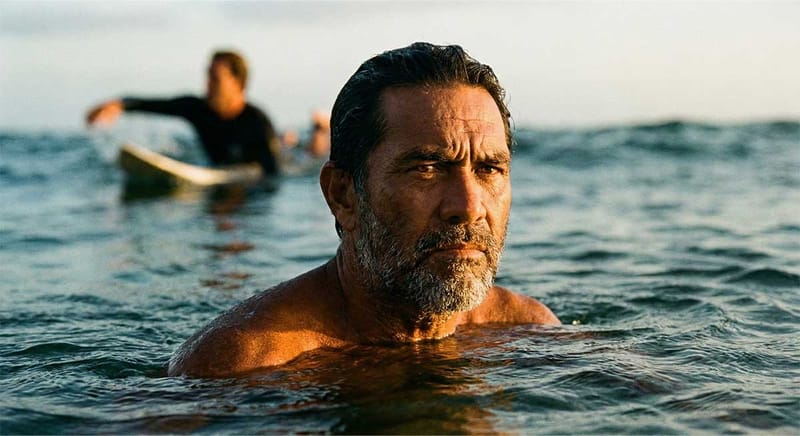
In a mainland lineup, surf etiquette is usually about who is closest to the breaking part of the wave. In Hawaiʻi, the rules are dictated by respect, localism, and community standing. Language is the primary way this pecking order is established and enforced before a single wave is caught.
A visitor who understands the local social fabric will use language to signal respect. Conversely, someone who acts entitled and speaks only mainstream surf jargon is quickly marked as a kook or a haole who does not belong. Here is how Pidgin actively manages the crowd:
Establishing Connection: Greeting the lineup with a genuine "Howzit, brah?" and a shaka shows you recognize the community. It is a baseline acknowledgment of the people around you and opens the door to talk story between sets.
Respecting Authority: Calling a senior local Uncle or Aunty is not just polite; it is mandatory. These terms reflect the Hawaiian value of honoring elders, whose wave priority in the water is nearly absolute.
Claiming and Yielding: When a set approaches, a firm "Going!" or "Ho, I stay go!" claims the wave. If someone has priority, a quick "Shoots" or "Rajah dat" signals that you are yielding your position without a fight.
Enforcing the Rules: If you drop in on someone or back-paddle a local, you will likely receive a stink eye. This hard glare is the first silent warning. If the disrespect continues, you might hear "Got beef?" or "You like scrap?"—clear indicators that physical enforcement is imminent.
The Rhythm of the Water Today: From Da Hui to Island Vibes
Hawaiian localism is often misunderstood by outsiders as mere territorial aggression. In reality, it is deeply rooted in protecting the culture and the land from constant external commodification. Groups like Hui O Heʻe Nalu, famously known as Da Hui, organized in the 1970s on the North Shore of Oʻahu to demand respect for local surfers in the face of massive international contests.
The ethos established by these early enforcers ensures that Hawaiian breaks do not devolve into the lawless chaos seen at mainland spots. They use Pidgin to self-govern, ensuring that waves are shared but respect is never optional. This protective instinct is a modern continuation of the kapu system, reminding visitors that they are guests in someone else's home.
This distinct local voice has also transcended the shoreline, heavily influencing modern island culture and music. The attitudes, vocabulary, and rhythms forged in Hawaiian lineups are now broadcast globally by reggae-rock and alternative bands rooted in surf culture. Artists like Pepper and Iration carry the cadence of the islands in their music, transitioning the raw localism of the lineup into a celebrated global sound. Their music maintains the relaxed but grounded aloha spirit, proving that the local voice can evolve while staying true to its plantation and ocean roots.
Malama Ka ʻĀina: Protecting the Local Voice
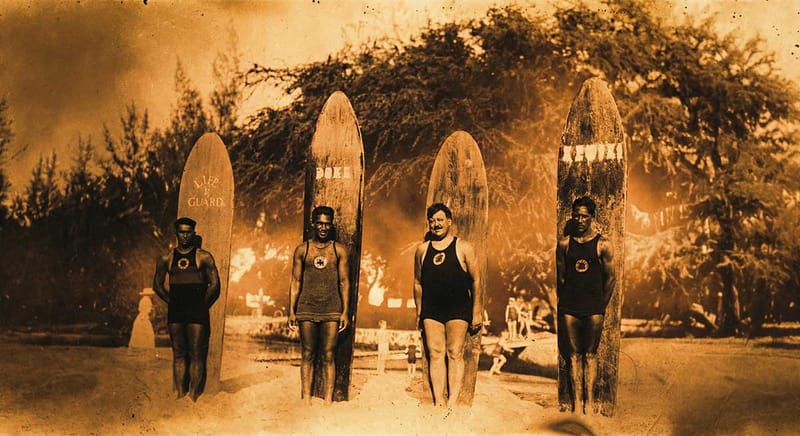
Surfing was given to the world by a lineage of Hawaiian legends who defined what it means to be a true waterman or waterwoman. Duke Kahanamoku introduced the sport to the globe while maintaining his supreme grace. Eddie Aikau showed what it means to charge when no one else will, birthing the eternal phrase "Eddie Would Go."
The legacy continued through figures like Rell Sunn, the Queen of Mākaha, who proved fierceness and aloha go hand in hand. It lived in the raw power of Kauaʻi's Andy Irons, and it thrives today in modern champions like Carissa Moore and John John Florence. They share the ocean with the world, but they never surrender the cultural identity that made it possible.
When you hear Pidgin spoken in the lineup today, you are hearing the survival of that identity. It is a living boundary that separates those who understand the culture from those who simply want to consume it. Understanding these words is about more than avoiding a conflict in the water.
It is about practicing malama ka ʻāina—taking care of the land. In Hawaiʻi, the ocean is the land, and the language is how the locals protect it.
Original archival photos courtesy of the Library of Congress. Colorized and enhanced.