
Da Language of Hawaii’s Car Scene
Hawaii's automotive culture is a world unto itself. It is a Pacific crossroads where Japanese engineering, West Coast lowrider traditions, Filipino gearhead ingenuity, and deep-rooted Pidgin English converge in garage bays and beachside car meets. The language used to talk about cars in the islands is inseparable from the culture that built them.
From the gleaming lifted trucks parked at Oahu meets to the slammed import tuners cruising through town, the words locals use to describe their rides reveal a distinct community. It is a community that cherishes what it has, builds with what it can get, and communicates in a dialect no mainland gearhead fully understands on first listen.
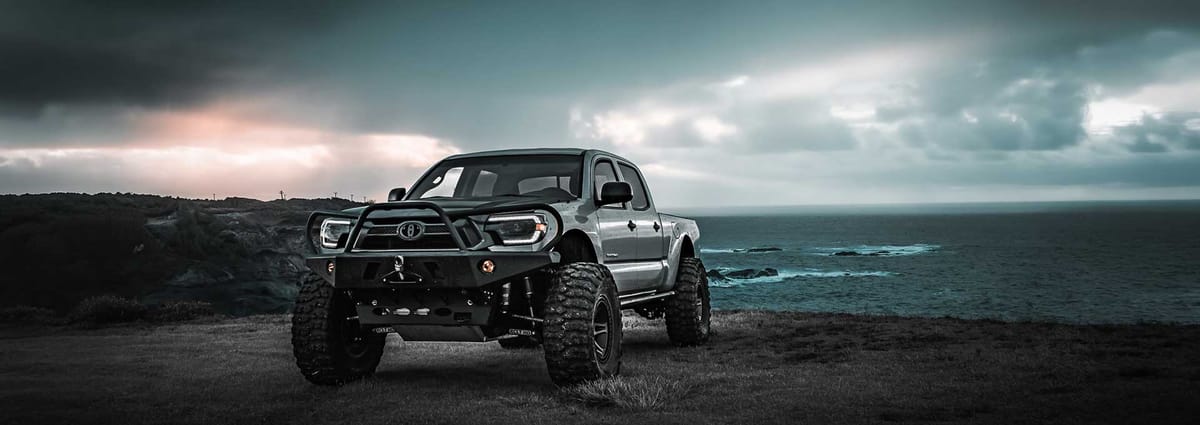
No single word captures the spirit of Hawaii's car culture better than cherry (also spelled cherreh). In local usage, cherry means pristine, perfect condition, and well-maintained. It is the highest compliment a vehicle can receive. It does not matter if the truck rolled off the lot twenty years ago; if the paint gleams, the engine purrs, and the owner put in the hours tinkering, it stays cherry.
Comedian Jo Koy captured this perfectly in his 2019 Netflix special, describing a local man bragging about a brand new 2003 Toyota Tacoma: "Cherry, brah. Fucking cherry! Lifted, brah. Lifted." The joke resonated deeply because it highlighted a core truth. In Hawaii, people take immense pride in ownership.
Plantation Roots to the Pavement
Hawaii's car slang does not exist in a vacuum. The language is a direct product of the islands' multicultural history. The terminology is an extension of Hawaii Creole English, which arose during the plantation era when speakers of Hawaiian, English, Japanese, Portuguese, Ilocano, and Tagalog needed a common tongue to communicate. For a complete look at how this language developed, you can read da history of Pidgin in Hawaii.
Car culture inherited this blending instinct. The Japanese influence runs deepest in the automotive space, bringing dominance to brands like Toyota and Honda, alongside terms borrowed from Japanese tuning culture. Filipino mechanics and builders brought their own traditions of resourceful fabrication to the islands.
Simultaneously, mainland American car culture arrived with military families stationed at bases across the state. Hot rods, muscle cars, and lowriders found a permanent home in the Pacific. The resulting slang reflects this melting pot perfectly. A Pidgin-speaking local might describe their build using Japanese chassis codes, American horsepower figures, and Hawaiian attitude all in the same sentence.
Wrenching in Pidgin
When locals get under the hood, the language shifts into a hybrid of standard mechanic slang and Pidgin inflection. Whether you are swapping an SR20 into a Nissan Silvia, trying to code a replacement Light Control Module on an E39, or diagnosing a stubborn P0012 error and misfires on a 335i, the garage is a communal space. Troubleshooting happens through talk-story sessions where problems are described with colorful local expressions.
On the opposite end of the spectrum from a cherry ride sits one that is bus' up (also written buss up or all bus). The term means busted, broken, or damaged. Applied to a car, it paints a vivid picture of a machine on its last legs.
When a car is not fully bus' up but things are clearly not right, locals call it hamajang. The word means messed up, mixed up, askew, or every which way. A hamajang engine bay is one where someone ran out of zip ties and started using fishing line.
Other essential Pidgin terms slide naturally into garage talk:
Junk: Bad, or not up to par. Used to describe a car that runs poorly or a modification that looks cheap.
Junkalunka: Old, broken down, and used up. This is the kind of car you would not trust on a steep pali (cliff) road.
Pilau: Stinky or rotten. Often used for an engine that is burning oil or an interior that reeks of mildew from the island humidity.
Da kine: The ultimate Hawaiian wildcard word that can mean literally anything, including that specific part you cannot remember the name of under the hood.
Shoots: Agreement, meaning "okay" or "let's do it." This is the word that closes every deal at a car meet.
Rajah dat: Pidgin for "roger that," confirming a plan, a part number, or a price.
Yotas, Tuners, and Kei Trucks
The Toyota Tacoma is not just a popular truck in Hawaii; it is a cultural institution. The lifted Tacoma, usually a second- or third-generation model from the early 2000s, defines the islands' truck scene. On Kauai, Maui, the Big Island, and Oahu alike, these trucks ride high on suspension lifts with wide wheel spacers pushing the tires out past the fenders.
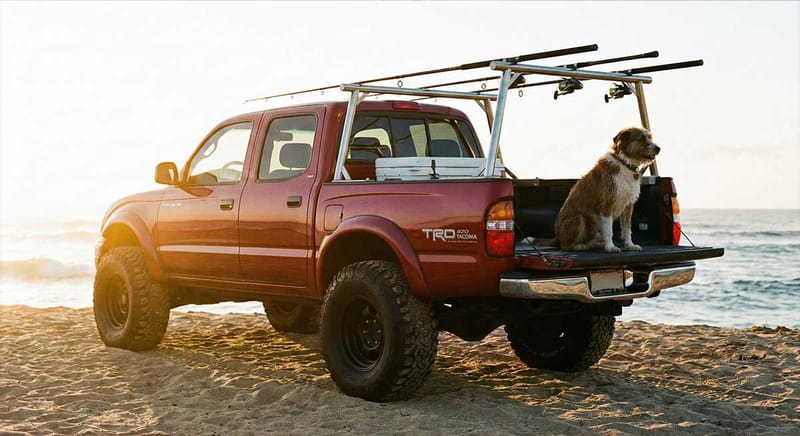
The "Hawaiian Taco" has become its own recognized substyle. It is characterized by a wide stance, moderate lift, and specific accessories. The standard loadout often includes fishing poles in the bed rack, a stand-up paddleboard strapped on top, the dog riding shotgun, and slippahs on the driver's feet. Hawaii has specific bumper height and suspension lift limitations, which is why local trucks tend to go wide with spacers and flares rather than absurdly tall.
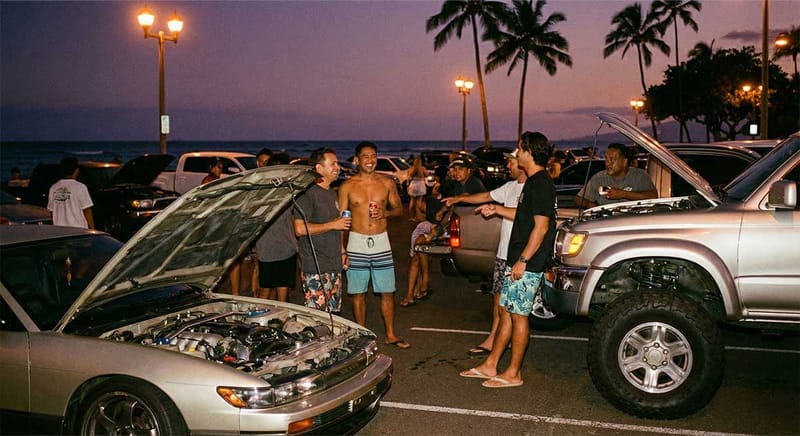
While lifted trucks own the streets, Hawaii's import tuner scene runs deep beneath the surface. The Honda Civic, Integra, and Accord have been cornerstones of island car culture since the 1990s. The term "rice" or "ricer" (Race Inspired Cosmetic Enhancements) has a complicated, often derogatory history nationwide, but in Hawaii, many local tuners reclaimed it with humor. The Honda scene remains highly active, with builders turning out pristine, show-quality engine bays that demand respect.
Hawaii's geographic position also creates a direct pipeline for JDM (Japanese Domestic Market) vehicles. Cars and trucks originally built for sale in Japan are imported under the 25-year federal exemption rule. This brings in right-hand-drive Nissan Skyline GT-Rs, Toyota Chasers, and Subaru WRXs.
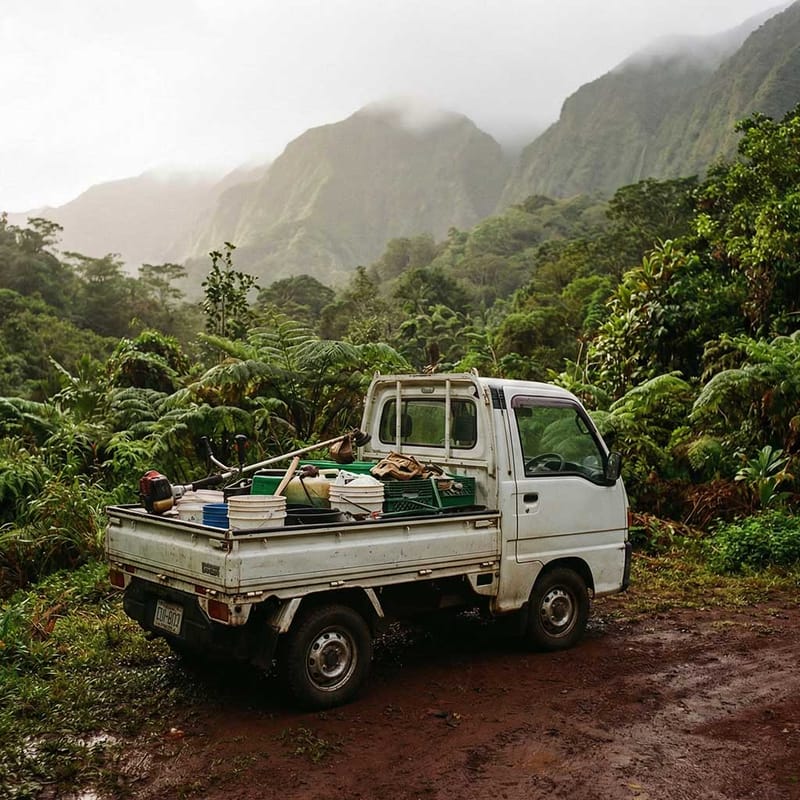
A massive part of this modern evolution includes Kei trucks (keitora). These tiny Japanese utility trucks, like Suzuki Carrys or Daihatsu Hijets, have found a devoted local following for farm work, beach runs, and general island utility. Keeping these JDM imports cherry is a massive undertaking, as the brutal toll of salt air and tropical humidity requires constant vigilance against rust.
Pride in the Ride
Hawaii's car language is about much more than vehicles. It is about identity, community, and the particular brand of pride that comes from building something with your own hands. Modifying cars on an island means dealing with salt that eats metal, shipping costs that double the price of parts, and speed limits that rarely exceed 60 miles per hour.
Despite these logistical hurdles, the community thrives. A lifted 2003 Tacoma with 200,000 miles is bragged about the same way a mainland gearhead might flex a brand-new exotic sports car. A 1992 Civic hatchback with a clean engine swap gets the same reverence as a factory-fresh luxury build.
In Hawaii, the ultimate status symbol is the work you put in. If it is yours, you built it, and it runs clean, that is cherry.
Original archival photos courtesy of the Library of Congress. Colorized and enhanced.