
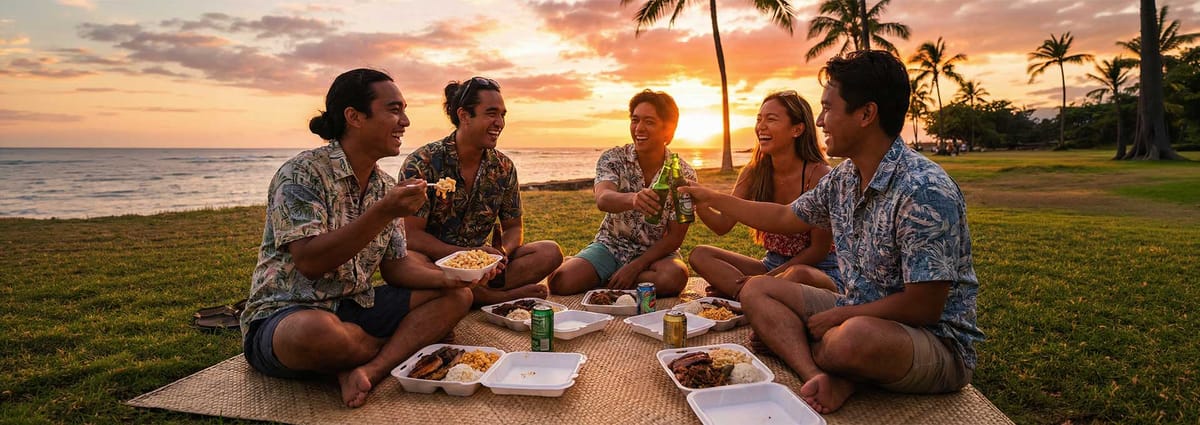
Deciphering the Language of the Hawaiian Plate Lunch
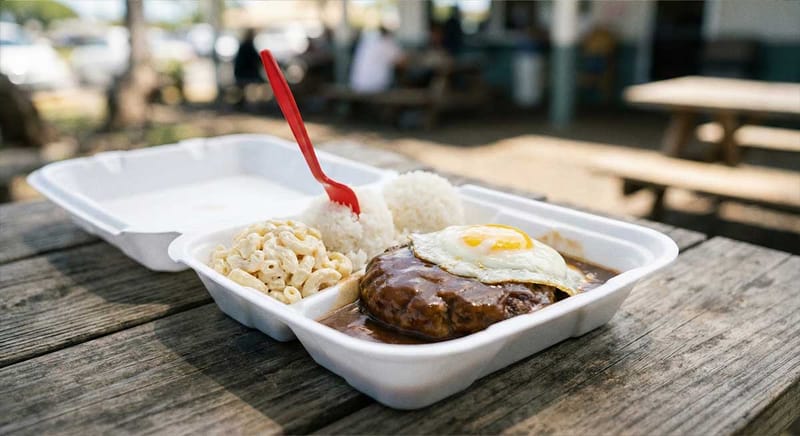
The Hawaiian plate lunch is an important cultural item tied directly to local language and island history. Every term used to order, describe, and share this meal reflects the shared experiences of immigrant laborers in Hawaiʻi. The vocabulary surrounding the plate lunch is drawn entirely from Hawaiian Pidgin, technically known as Hawaiʻi Creole English.
To understand the language of the plate lunch is to understand the local community itself. The phrases used at drive-ins and lunch counters across the islands form a clear indicator of local identity. The plate lunch operates as an essential way locals communicate belonging, shared experience, and mutual respect.
When you look closely at the vocabulary, it acts as a system derived from multiple languages simultaneously. The Japanese rice, American mac salad, Korean kalbi, and Filipino adobo all come together into a single meal. It provides both essential sustenance and a practical way to build community.
The Origins of the Movement
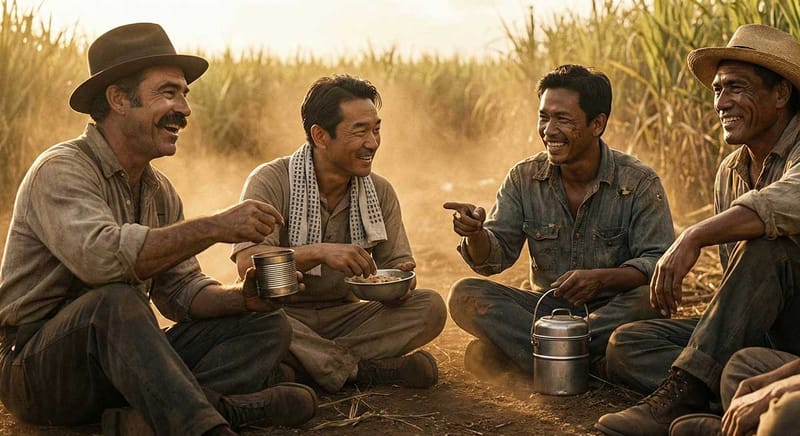
Hawaiian Pidgin originated on sugarcane plantations starting around 1835. Native Hawaiians needed a practical way to communicate with English-speaking bosses and new waves of immigrant laborers. These workers arrived from countries including Japan, China, Korea, the Philippines, and Portugal following the Reciprocity Treaty of 1875.
Because these groups spoke entirely different languages, they created a shared language to survive. They combined English vocabulary with the grammatical structures of their native tongues. For a comprehensive look at how this language developed, read the complete history of Pidgin.
The physical container used during this period was the bento bako, or Japanese lunch box. At mealtime, different ethnic groups traded dishes and flavors, exchanging kau kau (food) across language barriers. Historians note that this exact communal eating practice directly established the foundation for the modern plate lunch.
The first recognizable commercial plate lunch appeared in the late 1920s. Moyo Iwamoto, a Japanese immigrant, sold plates of rice and entrées for 50 cents on Channel Street in Honolulu. By the 1930s, lunch wagons were feeding stevedores across the islands, firmly establishing the meal in local history.
Localizing the Global Trend
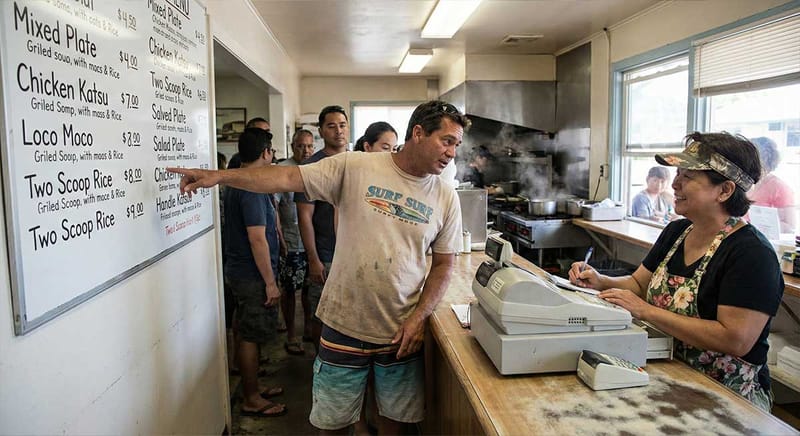
As the plate lunch evolved, Pidgin integrated into the ordering process to localize the daily experience. The meal transitioned from a necessity into a defining cultural staple through specific vocabulary. The ordering script at any lunch counter relies heavily on the strict formula of two scoop rice and one scoop mac.
Two scoop rice: This specifies precisely shaped mounds of white, sticky rice formed with an ice cream scoop. It functions as the crucial, absorbent foundation for the meal.
One scoop mac: This refers to the mayonnaise-heavy macaroni salad, an American contribution fully adopted by the local community.
Gravy all over: This request smothers the entire plate in brown gravy, unifying the diverse elements of the dish.
Loco moco: A classic plate lunch entrée invented in 1949 at the Lincoln Grill in Hilo, consisting of a hamburger patty, rice, gravy, and an egg.
These terms efficiently address island-specific experiences and connect directly with the local community. The language reduces communication down to its most essential components. When you order with these phrases, you claim a shared identity that standard English cannot replicate.
Another essential phrase is broke da mout, used to describe food that is exceptionally delicious. It likely traces its origins to the Hawaiian phrase ai a hewa ka waha, meaning to eat until your mouth can take no more. Saying a meal is ʻono (delicious) and broke da mout directly honors the cook's skill.
From Lunch Wagons to Modern Media
Today, the plate lunch trend exists as a deeply ingrained aspect of modern local life. The physical container has shifted from metal plantation tins to the styrofoam clamshell, but the language remains firmly intact. The classic mixed plate, featuring multiple entrées, continues to dominate menus from neighborhood drive-ins to modern culinary establishments.
The integration of Pidgin into mainstream media further solidified these food terms. The comic dictionary Pidgin to Da Max, published in 1981, formally defined the plate lunch as the state food of Hawaiʻi. Selling 25,000 copies in its first month, the book proved how deeply this food vocabulary resonates with the population.
This cultural trend and its accompanying language also transition into modern music and artistic practices. The laid-back local identity tied to eating grindz after work at a pau hana is reflected in contemporary island reggae and rock. You see this local voice carried forward by modern bands such as Pepper and Iration.
These modern artists heavily feature themes of island life, local food, and shared community gatherings in their work. By integrating local phrases and celebrating the casual island lifestyle, they broadcast the plate lunch culture to a global audience. The language continues to evolve while remaining firmly rooted in its plantation origins.
Preserving the Local Voice
The plate lunch remains Hawaiʻi's most accessible meal, available to everyone regardless of background. Its most profound legacy, however, is the active preservation of Hawaiian Pidgin. The vocabulary forged by laborers with no common language continues to serve as the spoken standard of local life.
Every order of two scoop rice at a modern lunch counter actively preserves this multicultural history. The community sustains its traditions by keeping these specific words, such as da kine and pūpū, in daily use. The plate lunch is ultimately a continuous act of cultural preservation, securing the authentic local voice for future generations.
Original archival photos courtesy of the Library of Congress. Colorized and enhanced.