
Deciphering Hawaiʻi's Potluck Culture
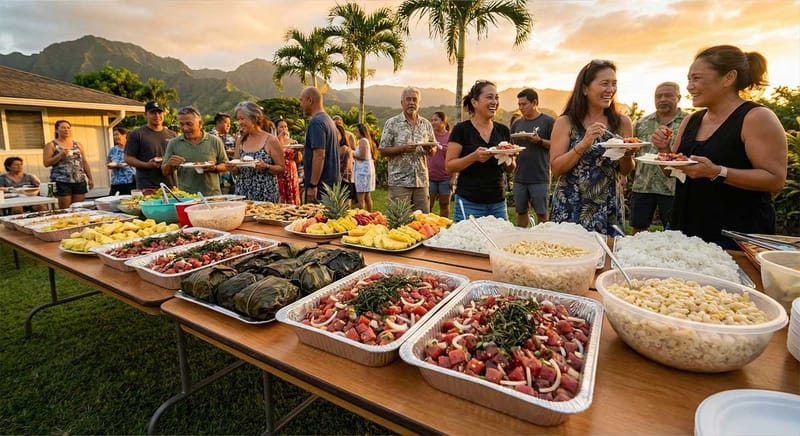
Hawaiʻi operates as a potluck society. Gatherings across the islands are communal events where the items you bring and the way you eat communicate your connection to the local community. The buffet table displays bright pink ahi poke, green laulau, white potato salad, yellow pineapple, and purple sweet potatoes.
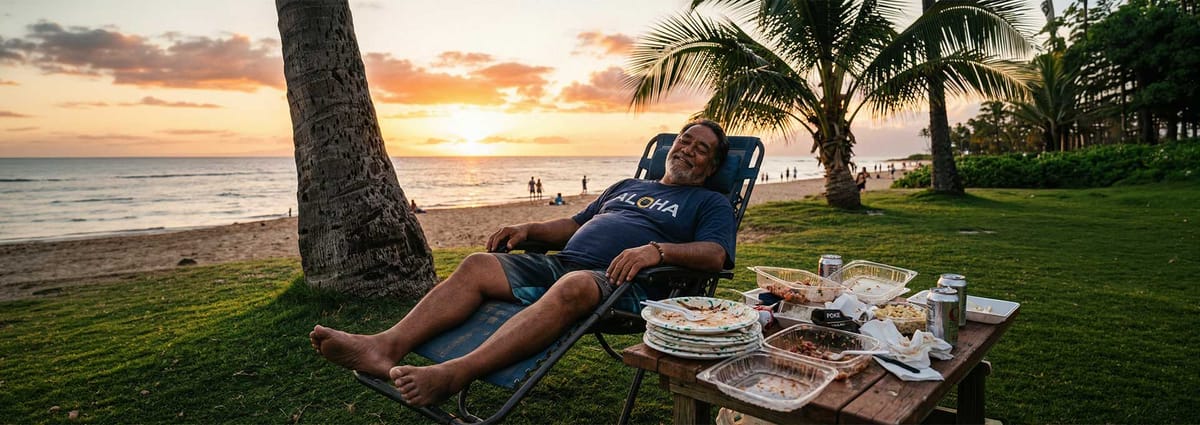
At the center of this social agreement is the kanak attack—the heavy, unavoidable sleepiness that follows a perfectly executed local feast. This physiological response is the inevitable conclusion to a proper potluck. It serves as proof that the food was good, the portions were generous, and the gathering was a success.
Origins of the Island Feast
The foods found on our folding tables today originate from multiple different locations. Polynesian voyagers, Chinese and Japanese plantation laborers, Portuguese immigrants, Filipino families, and American military personnel each brought specific dishes that now sit side by side. The plate lunch format emerged during the plantation era, when laborers required cheap, filling meals to sustain them through long days of physical work.
Just as the language developed to bridge communication gaps on the plantations—which you can explore in the complete history of pidgin—the food evolved to combine diverse traditions into a unified practice. The standard format of protein, rice, and mac salad is a direct descendant of the Japanese bentō box adapted for multicultural tastes. Familiar Western flavors in dishes like the hamburger steak became an introduction to the wide variety of local grinds.
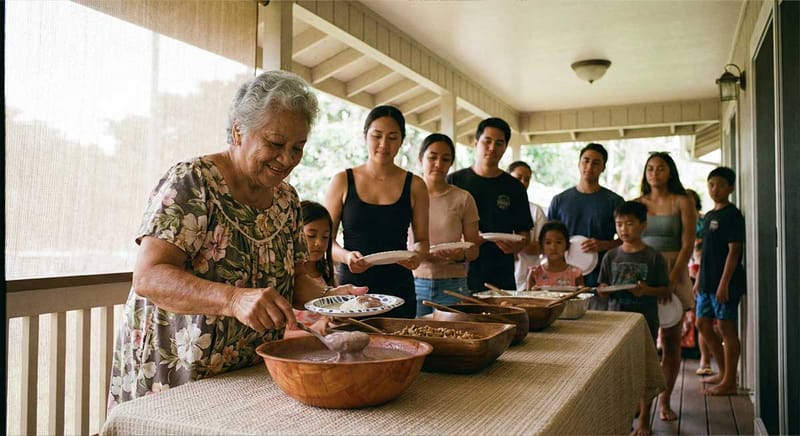
This era also cemented the importance of poi, the starchy food made from pounded kalo (taro) root. Fresh poi is mildly sweet, but as it ferments over a day or two, it develops a tangy flavor that many locals prefer. In ancient custom, no one could display anger at the table when poi was present, establishing the deep respect required at mealtime. The consistency is measured by the number of fingers needed to scoop it, with diners dipping their index and middle fingers directly into the communal bowl.
Communicating Through Local Vocabulary
Pidgin integrated directly into these communal gatherings, localizing the global concept of a shared meal. The vocabulary addresses island-specific experiences and connects the local community. The phrase pau hana (literally "done with work") acts as far more than a translation of happy hour.
When someone announces pau hana, they signal a complete mental and physical detachment from the workday. It represents a philosophy of balance that honors Indigenous Hawaiian practices. This transition into relaxation and connection is the primary social gathering of island life, often serving as the direct precursor to a weekend potluck.
Similarly, the term kanak attack derives from "Kanaka Maoli," referring to Native Hawaiian people. When someone says they are ready for a majah kanak attack after consuming a heavy plate, they are utilizing the specific social language of Hawaiʻi. The language frames the post-meal fatigue as a celebrated cultural event.
From Plantation Camps to Modern Gatherings
Today, the local potluck remains the standard practice for birthdays, graduations, baby showers, and sporting events. The audio environment at these modern gatherings has transitioned, often featuring reggae and island alternative bands like Pepper and Iration. These artists provide the audio background for the modern pau hana, connecting historical traditions with contemporary island life.
While the music has modernized, the established rules of the potluck remain strictly enforced:
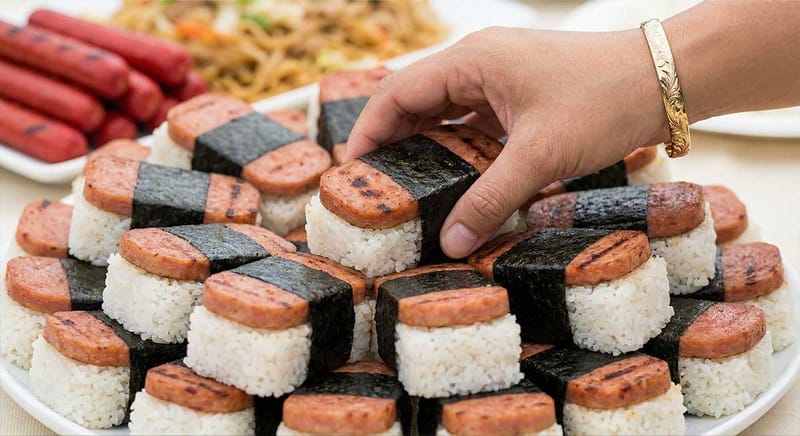
Never show up empty-handed: Arriving without a contribution is a major offense. Guests must bring a pan of chow mein, a platter of spam musubi, or a case of drinks.
Bring local-size portions: A contribution must feed the immediate family plus any aunties, uncles, or cousins who might attend. Generosity is the strict expectation.
Respect the line: Children and kūpuna (elders) receive their food first. Attendees do not return for seconds until the majority of the group has finished their first plate.
The menus continue to feature historical staples alongside modern variations. Spam musubi functions as a highly portable item, eaten standing up between conversations. The dish traces its origins to World War II and Japanese-American adaptation. Today, Hawaiʻi consumes roughly seven million cans of Spam annually, leading the nation in per-capita consumption.
Meanwhile, the loco moco maintains its status as a primary comfort food. Born in 1949 at the Lincoln Grill in Hilo for the Lincoln Wreckers Sports Club, the dish consists of white rice topped with a hamburger patty, a sunny-side-up egg, and brown gravy. Modern variations now include kalua pork or Portuguese sausage.
Extending the Shared Meal
The potluck table showcases the diverse demographics of the islands. Distinct culinary traditions converge without requiring assimilation. The primary requirement is that everyone brings an item, everyone eats, and everyone respects the shared space.
One of the most defining traditions is the concept of making a take plate before departing. Guests assemble a plate of leftover food to transport home, assisting the host with the cleanup process. This specific action extends the communal meal beyond the scheduled event. In recent years, the practice often includes donating leftover plates to community members in public parks.
Food in Hawaiʻi provides a direct method to test a newcomer's commitment to the local culture. As individuals prove themselves willing to eat, cook, and share local food, they advance in the potluck hierarchy. Generosity is expected, established rules are respected, and the resulting kanak attack confirms the gathering successfully fulfilled its intended purpose.
Original archival photos courtesy of the Library of Congress. Colorized and enhanced.