
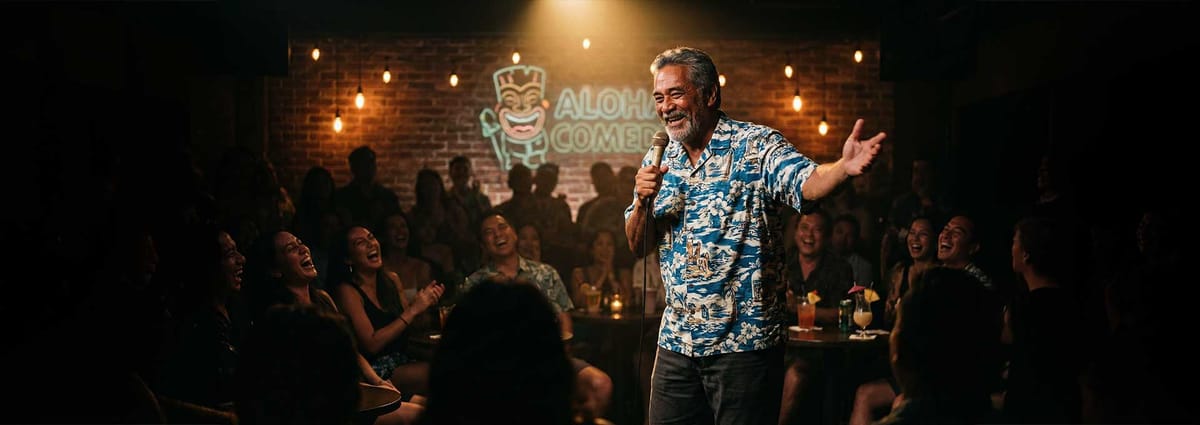
How Da Kine Comedy Built a Hawaiʻi Linguistic Legacy
Hawaiian comedy relies entirely on Hawaiʻi Creole English, commonly known as Pidgin. This fully developed creole language is spoken by an estimated 600,000 people natively and another 400,000 as a second language across the Hawaiian Islands.
From the mid-1970s to the present day, comedians like Rap Reiplinger, Frank De Lima, Bu Laʻia, Andy Bumatai, and Augie T have focused their performances on the distinct cadence, timing, and vocabulary of Pidgin. Their comedy displays local identity and shared experiences directly to the community.
Translating their jokes into Standard English removes the cultural context that makes them funny. Pidgin is not incorrect English, but a distinct language with its own grammar, rhythm, and worldview.
The Origins of the Language
Hawaiian Pidgin started on sugar plantations in the late 1800s. It served as a necessary contact language among immigrant laborers arriving from China, Japan, the Philippines, Portugal, and other nations.
Plantation owners deliberately separated ethnic groups in their housing to prevent organizing among the workers. Despite this, workers created an English-lexified pidgin to communicate in the fields.
By the 1920s, the children of these workers expanded the pidgin into their native tongue. It became a recognized creole with complex grammar and the full expressive range of any human language.
Mainstream institutions have historically stigmatized the language, pushing locals to speak Standard English instead. Educators often attached a social consequence to speaking Pidgin, forcing students to adopt so-called better English. Pidgin comedy resonates deeply with audiences because it reclaims and celebrates a language that the education system tried to suppress.
Localizing the Humor
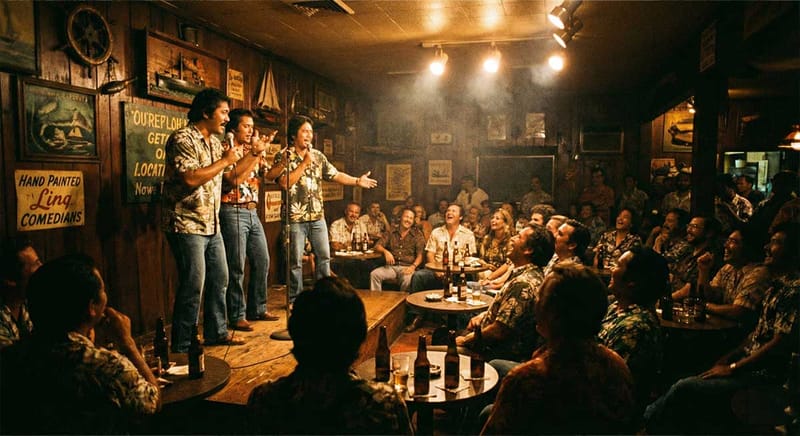
The Hawaiian Renaissance of the 1970s revived local culture, music, and language across the islands. During this period, the comedy trio Booga Booga gained massive popularity by rejecting mainland humor. They asserted their local identity by performing strictly in Pidgin, highlighting situations that were specifically humorous to local residents.
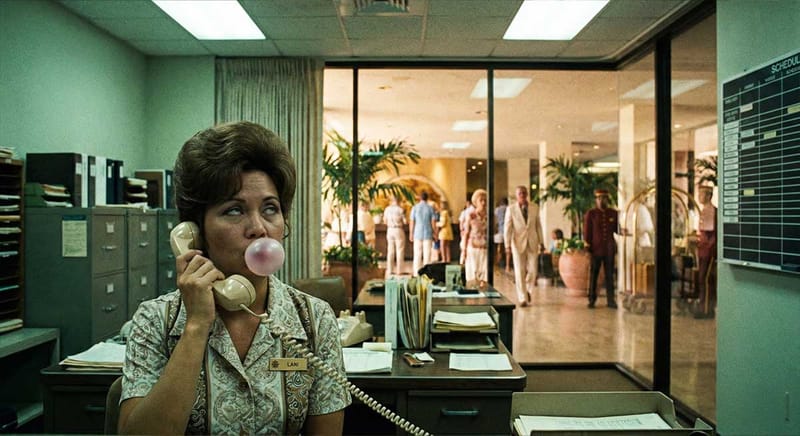
Rap Reiplinger, a founding member of Booga Booga, utilized his solo career to document the social and economic adjustments of post-statehood Hawaiʻi. His iconic "Room Service" sketch features a hotel telephone operator taking an order from a mainland guest named Mr. Fogarty.
The operator’s Pidgin cadence creates a comedic collision between the tourist-industry expectation of servile hospitality and the reality of a local worker. The humor relies entirely on the specific rhythm of Pidgin speech, including drawn-out pauses and casual asides.
Pidgin's distinct grammar diverges from Standard American English to create unique comedic timing. Comedians utilize these specific linguistic features to construct their delivery:
Zero copula: Dropping the verb "to be" ("She pretty" instead of "She is pretty") creates a blunt, fast delivery style.
No past tense inflection: Relying on context for tense ("Yesterday he go school") allows comedians to tell stories in a perpetual present state.
"Stay" as progressive marker: Using "I stay eat" to mean "I am eating" adds specific rhythmic pacing to comedic timing.
The most critical linguistic tool is da kine. It functions as a universal placeholder that relies entirely on shared context between the speaker and listener. When a comedian uses da kine, they establish an immediate in-group connection with the audience, signaling that the joke is specifically for locals.
Comedians like Frank De Lima expanded on this by incorporating vocabulary from multiple source languages. His acts feature words like pau (finished), grindz (food), bumbai (later), and brok da mout (delicious).
De Lima frequently utilizes code-switching, shifting between Portuguese, Filipino, Japanese, and Hawaiian accents to represent the local community accurately. In Hawaiʻi, these shifts function as authentic representations of local neighbors rather than generic foreign accent comedy.
Adapting the Local Voice
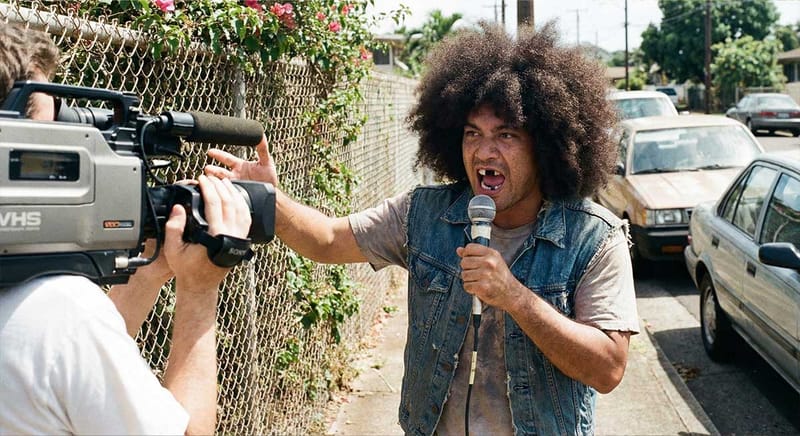
In the early 1990s, Bu Laʻia introduced a confrontational style of Pidgin comedy with a raw, countercultural performance style. His stage name is a Pidgin homophone for "Bull Liar," meaning an outrageous liar.
He used thick Pidgin delivery not just for laughs, but as direct social commentary and a statement of identity. His "Word of Da Day" segments on television taught Pidgin vocabulary, such as pilau (foul or rotten), directly to his audience.
As comedy evolved, performers like Andy Bumatai and Augie T began taking Pidgin comedy to broader audiences. Bumatai's strategic code-switching between Pidgin and Standard English allows him to voice different characters, a technique analyzed in academic journals like Pragmatics.
Augie T became the only local comedian to sell out the Blaisdell Arena, eventually taking his act to national platforms like Dry Bar Comedy. He relies on universally relatable family stories and physical humor to engage mainland audiences. However, the core of his performance remains tied to the specific prosody, rhythm, and intonation of Pidgin.
A transcript of Augie T's performances captures the words but misses the comedic timing entirely. The mumbled asides, the rhythmic delivery, and the sentences that drop off to let the audience fill in the blanks provide the actual comedic timing.
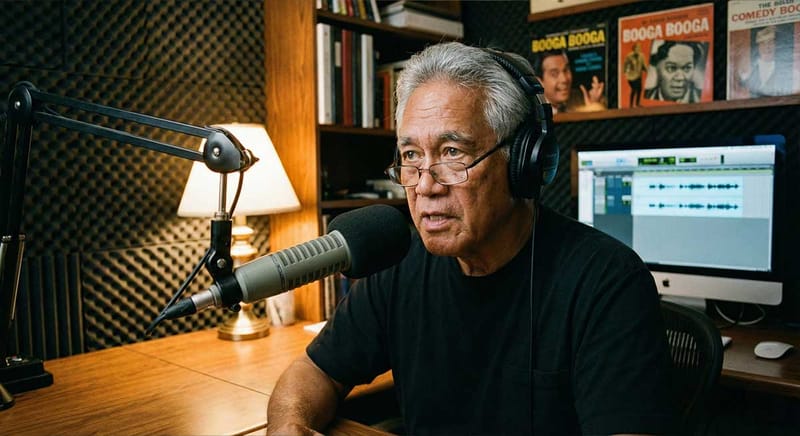
Andy Bumatai transitioned from stand-up routines to hosting The Daily Pidgin podcast. His platform now focuses entirely on discussing the Hawaiian Pidgin language and local customs. This represents a shift from simply performing in Pidgin to actively preserving and teaching the language.
The Lasting Impact on Local Culture
Pidgin comedy resists translation because the humor relies on shared identity and precise linguistic timing. The punchlines depend on phonological features like final consonant deletion and vowel mergers that create a distinct acoustic quality.
Code-switching between formal English and Pidgin signals shifts in power and authenticity that a monolingual audience cannot perceive. When a local audience laughs at a Pidgin punchline, they are affirming a shared identity that exists outside mainstream American culture.
The legacy of these comedians extends far beyond entertainment. Their work validates Hawaiʻi Creole English as a living, vital language capable of producing art that Standard English cannot replicate.
By continuing to perform and teach in Pidgin, the local community ensures the ongoing preservation of their distinct cultural voice. The language itself remains the true cultural asset.
Original archival photos courtesy of the Library of Congress. Colorized and enhanced.